When AI Meets Oncology
Perspectives from Dr. Hanybal Yazigi
1. Clinical Judgment vs. AI Suggestions
Question: If an AI tool gives a treatment or prognosis suggestion that feels off to you, do you usually trust the AI or your own judgment?
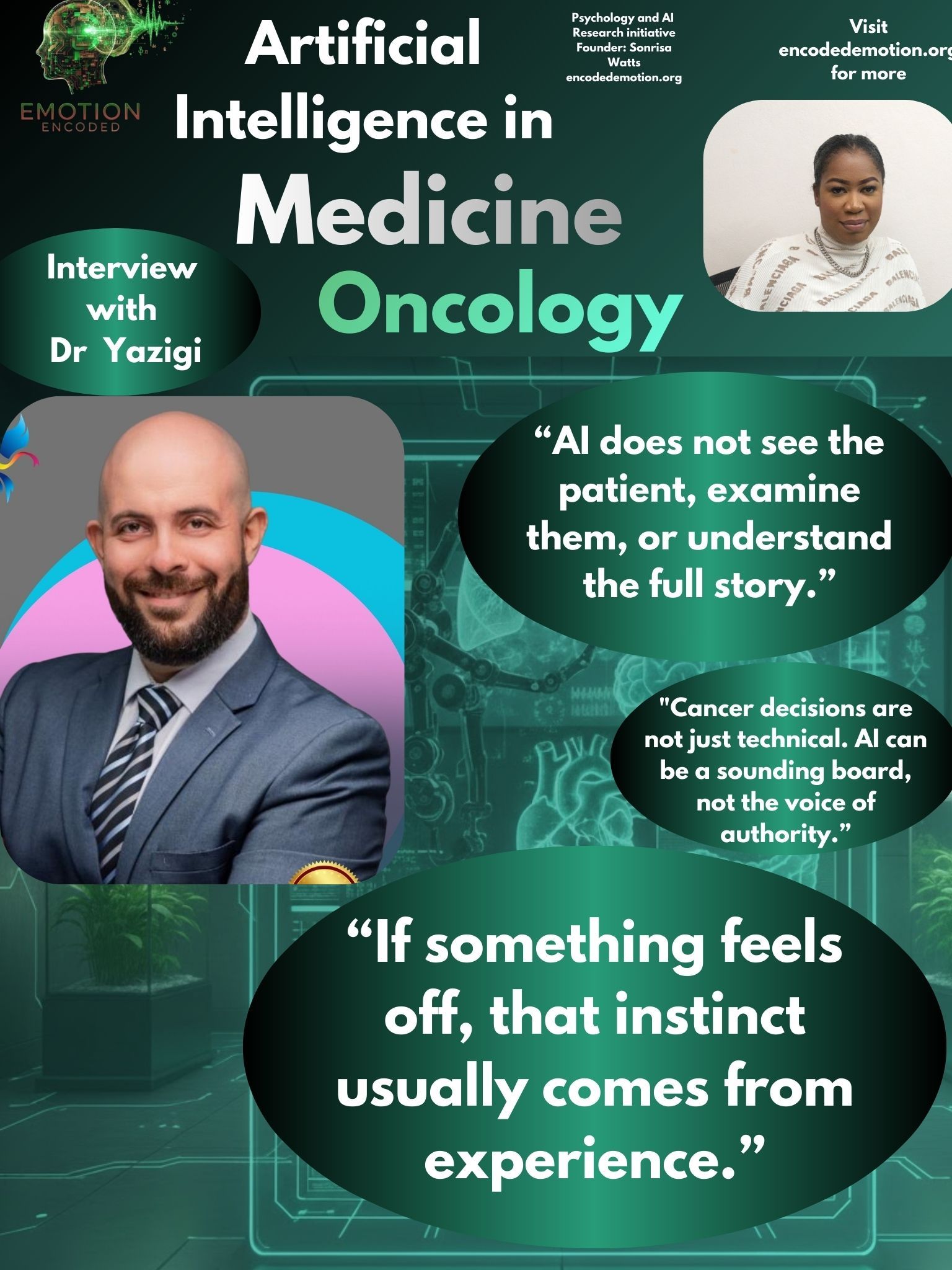
"I would always trust my own clinical judgment. AI can be a very useful support tool — it can suggest differentials, highlight possibilities, or point me toward things I may want to double-check — but it does not see the patient, does not examine them, and does not know the full story, context, or nuances of the case. As physicians, we integrate far more than just data: we integrate the patient’s history, comorbidities, social context, preferences, and subtle clinical clues. If something feels off, that instinct usually comes from experience, and I would always prioritize that over an AI suggestion."
Dr. Yazigi emphasizes the limitations of AI’s data-centric approach, identifying the integration of patient-specific nuances and clinical "instinct" as the superior framework for decision-making.
2. Managing AI Mistakes
Question: If an AI system makes a noticeable mistake in a cancer case, does that make you hesitant to use it again?
"I wouldn’t rely on AI to manage a case independently in the first place, so this situation wouldn’t really arise in that way. In my view, AI should always be used as a supportive tool, not as a decision-maker. Any suggestion it provides should be reviewed, verified, and researched by the physician before being applied to a real patient. For anyone using these tools, my advice would be exactly that: never take an AI recommendation at face value — always critically assess it, confirm it against guidelines and evidence, and place it in the full clinical context of the patient."
The contributor advocates for a defensive usage model where AI is strictly relegated to a supportive role, with the physician acting as an essential filter to prevent algorithmic error.
3. Non-Negotiable Human Responsibility
Question: In cancer care, what is one decision you think should always stay human, no matter how advanced AI becomes?
"Everything basically. The overall diagnosis, treatment, management strategy and goals of care — especially decisions around intent (curative vs palliative), treatment intensity, and end-of-life care — must always remain human. These decisions are not just technical; they are deeply personal, ethical, and emotional. They require understanding the patient’s values, fears, family situation, and wishes. So no matter how advanced AI becomes, it is my opinion that it cannot replace the physician's responsibility of managing and optimizing a patient, understanding them, and guiding them through their illness."
Dr. Yazigi delineates high-stakes oncological management as inherently human-centric, asserting that technical accuracy cannot substitute for the ethical and emotional guidance required in palliative and diagnostic care.
4. Practical Integration
"However, to wrap up, I do think there is a valid place for AI. For example, in my daily practice, I use AI to optimize time and workflow: helping to structure drafts, notes, templates, summarize information (especially research), or point toward relevant literature. It can also help provide insight on what literature may be useful or act as a sounding board when a diagnosis is difficult or when there are no colleagues immediately available to discuss a case with. But it should never dictate how a patient is managed. The final responsibility — medically, ethically, and morally — must always rest with the treating physician."
In conclusion, the contributor establishes a clear operational boundary: AI is an administrative and intellectual "sounding board," while clinical, ethical, and moral accountability remains non-transferable.